
Two-thirds of South Korea runs its money through Toss. Now Toss is exploring putting the Won onchain.
Optimism and Toss signed a Memorandum of Understanding (MOU) to explore a Korean Won stablecoin built on the OP Stack, with privacy from Sunnyside Labs' Privacy Boost. Over three months, a proof of concept will test whether money can settle onchain and still meet Korea's compliance, privacy, and control standards.
What did Optimism and Toss agree to?
Optimism and Toss have signed a Memorandum of Understanding (MOU) to explore a Won-backed stablecoin built on the OP Stack. Over the next three months, the two will run a proof of concept testing whether money can settle onchain while meeting Korea's compliance, privacy, and control standards.
“For Web3 technology to successfully integrate into institutional finance, strict regulatory compliance and strong privacy protection are essential. Using Optimism's proven OP Stack, we aim to build a highly trusted, compliant digital financial infrastructure tailored to the Korean market.”

Optimism provides the blockchain infrastructure. Sunnyside Labs, the team behind Privacy Boost, contributes the privacy layer that keeps individual transaction details confidential on a public network.
Why does Toss matter at this scale?
Toss is the app that runs South Korea's money. More than 30 million people, close to two-thirds of the country, use it for banking, payments, investing, credit, and taxes. What used to take a dozen apps and several bank branches now runs through one.
Toss is not experimenting at the edges. Founded in 2015 with Korea's first free peer-to-peer transfers, it now serves as a daily financial control center for 60% of the country.
South Korea is also one of the most crypto-engaged markets in the world. An estimated 16 million people actively trade digital assets. A Won-backed stablecoin that meets institutional standards would have a market ready for it.
What is the proof of concept testing?
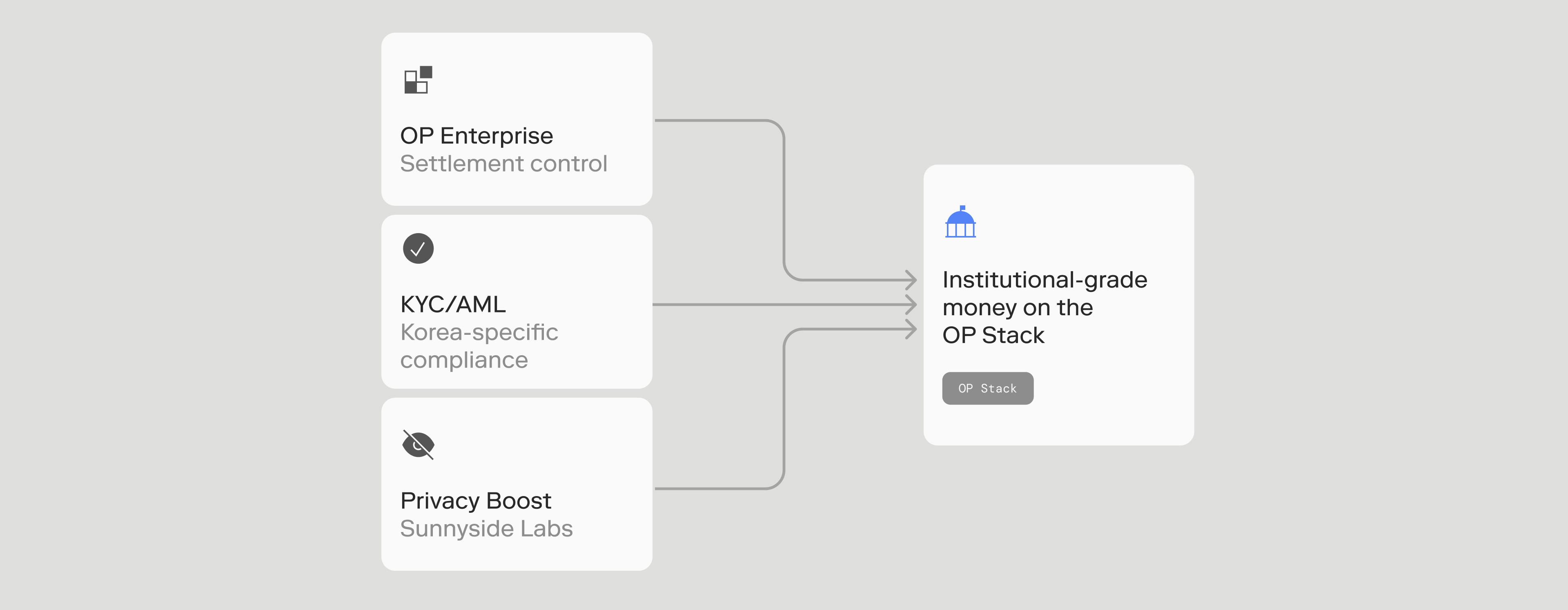
The proof of concept centers on three requirements Toss set for institutional-grade money:
- OP Enterprise, which gives financial institutions direct control over how transactions are ordered and processed, the piece they care about most for settlement and compliance.
- KYC/AML infrastructure (know-your-customer and anti-money-laundering checks) built to Korea's requirements for digital asset transactions.
- Privacy Boost from Sunnyside Labs, keeping user financial data private on a transparent, auditable network.
Who else has moved regulated money onto the OP Stack?
This is the fourth time in a year regulated finance has reached the same conclusion in a different market.
- Europe: Bitpanda, Vision Chain (announced), Europe's first MiCA-compliant chain
- United States: Kraken's Ink, Upgraded to OP Enterprise
- Japan: Mitsui & Co. Digital Commodities, Zipangcoin, tokenized gold, silver, and platinum
- South Korea: Toss, Won-backed stablecoin (proof of concept, in progress)
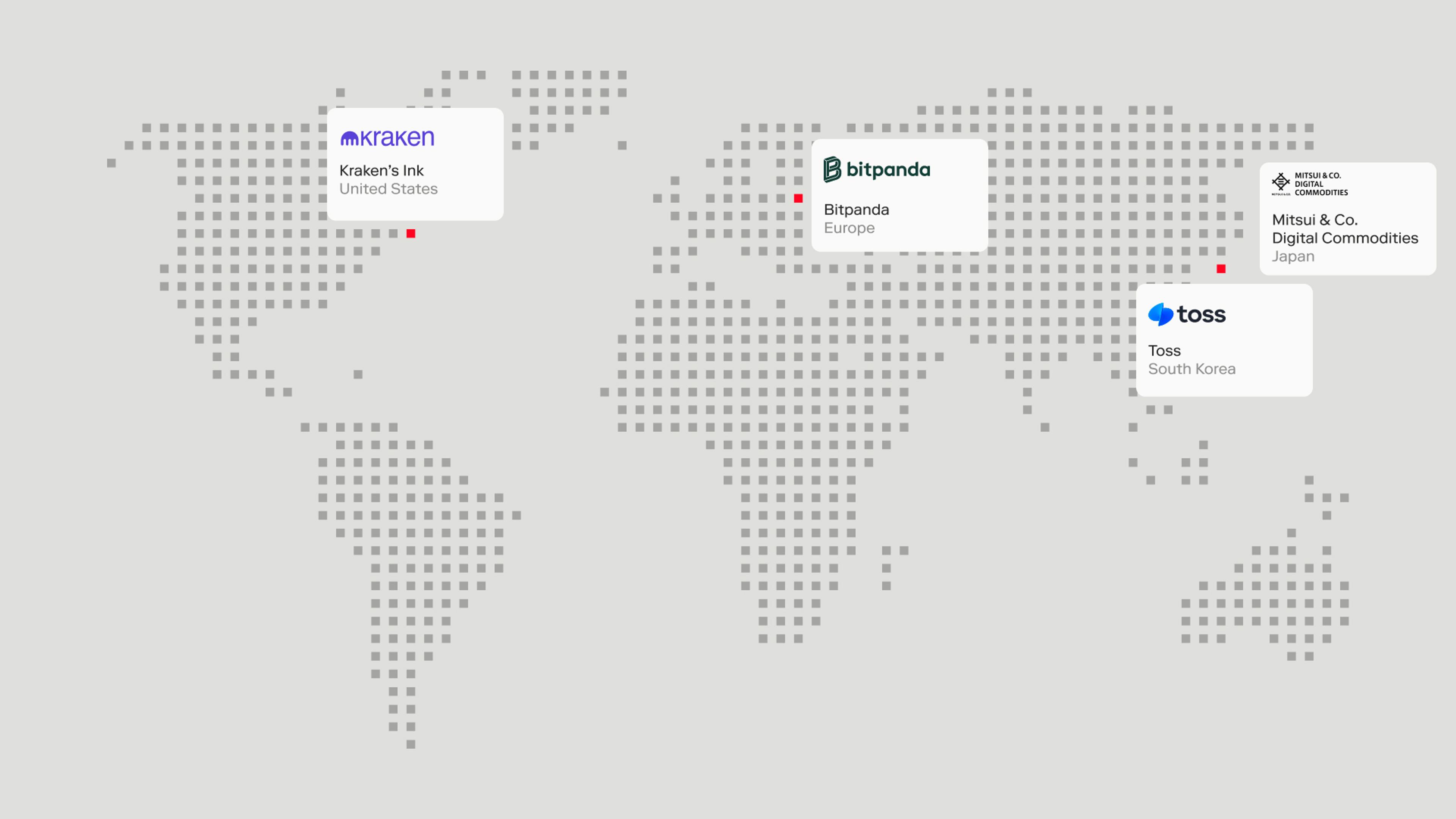
Four markets, four financial cultures, one piece of infrastructure.
How does this fit the broader OP Stack ecosystem?
More than 30 chains have been deployed on the OP Stack, including Coinbase's Base, Kraken's Ink, Sony's Soneium, and World. Toss is testing a different layer of that story: not a consumer app or an exchange chain, but a Won-backed stablecoin, held to the standards regulated money demands.
“Korea has one of the most sophisticated financial ecosystems in Asia, and Toss has built an exceptional platform for its users. This proof of concept is about demonstrating that the OP Stack can meet the compliance, privacy, and performance standards that regulated financial institutions require, and we're excited to prove that out alongside some of the most credible partners in the market.”

The proof of concept runs over the next three months.
FAQ
What is the Optimism-Toss MOU about?
Optimism and Toss signed a Memorandum of Understanding to explore a Won-backed stablecoin built on the OP Stack. The two will spend three months running a proof of concept to test whether money can settle onchain while meeting Korea's compliance, privacy, and control standards.
What is Toss?
Toss is a South Korean financial super-app founded in 2015. More than 30 million people, close to two-thirds of the country, use it for banking, payments, investing, credit, and taxes in a single app.
What does the proof of concept test?
It tests three requirements Toss set for institutional-grade money: OP Enterprise for settlement control, KYC/AML infrastructure built to Korea's standards, and Sunnyside Labs' Privacy Boost for transaction privacy on a public network.
What is OP Enterprise?
OP Enterprise is the part of the OP Stack built for regulated institutions. It gives financial institutions direct control over how transactions are ordered and processed — the part they focus on most for settlement and compliance.
What is Privacy Boost?
Privacy Boost is a privacy layer built by Sunnyside Labs. It keeps individual transaction details confidential even though the underlying network remains public and auditable.
Is the Won stablecoin live?
No. The MOU covers a three-month proof of concept to test feasibility, not a live product launch.
Which other companies use the OP Stack for regulated finance?
Toss is the fourth regulated-finance name to build on the OP Stack in a year: Bitpanda in Europe (announced Vision Chain, a MiCA-compliant chain), Kraken's Ink in the United States (upgraded to OP Enterprise), and Mitsui & Co. Digital Commodities in Japan (Zipangcoin, tokenized precious metals).
Glossary
OP Stack - The open-source software that powers Optimism and more than 30 other blockchains, including Coinbase's Base, Kraken's Ink, and Sony's Soneium.
OP Enterprise - The part of the OP Stack built for regulated institutions, giving them direct control over how transactions are ordered and processed.
MOU (Memorandum of Understanding) - A non-binding agreement between two organizations to explore working together, typically ahead of a formal contract.
KYC/AML - Know-your-customer and anti-money-laundering checks: the identity verification and monitoring processes regulators require for financial transactions.
MiCA - The European Union's Markets in Crypto-Assets regulation, the EU's compliance framework for crypto-asset service providers.
Privacy Boost - A privacy layer built by Sunnyside Labs that keeps individual transaction details confidential on a public blockchain network.
Authored by

Optimism