
How does a crypto exchange offer institutional DeFi to its users?
An exchange offers institutional DeFi by putting onchain financial products in front of its users, either products the exchange builds itself or products from partners it integrates, and settling them on infrastructure the exchange controls. The common pattern in 2026 is to launch a dedicated Layer 2 chain and use it as the settlement and application layer for those products.
The products fall into a few categories. Onchain settlement moves value between accounts with fast confirmation and a public audit trail. Lending and borrowing let users post collateral and draw credit against it. Yield products route idle balances into onchain strategies. Stablecoin rails handle payments and cross-border transfers in dollar-denominated tokens. An exchange rarely builds all of these alone. It builds the ones close to its core business and integrates the rest from established DeFi protocols.
The infrastructure question sits underneath all of it. An exchange can deploy these products on a shared public network, or it can run its own chain. The trade-off is control versus speed to launch, and it is the decision most of this article is about.
What chain infrastructure does an exchange use for institutional DeFi?
Most exchanges launching institutional DeFi run their own Layer 2 chain rather than deploying on a shared network. A dedicated chain lets the exchange set who can transact, screen addresses at the sequencer level, control the transaction economics of the chain it runs, and tune the environment to its compliance and product requirements. A shared network is faster to launch on but gives up that control.
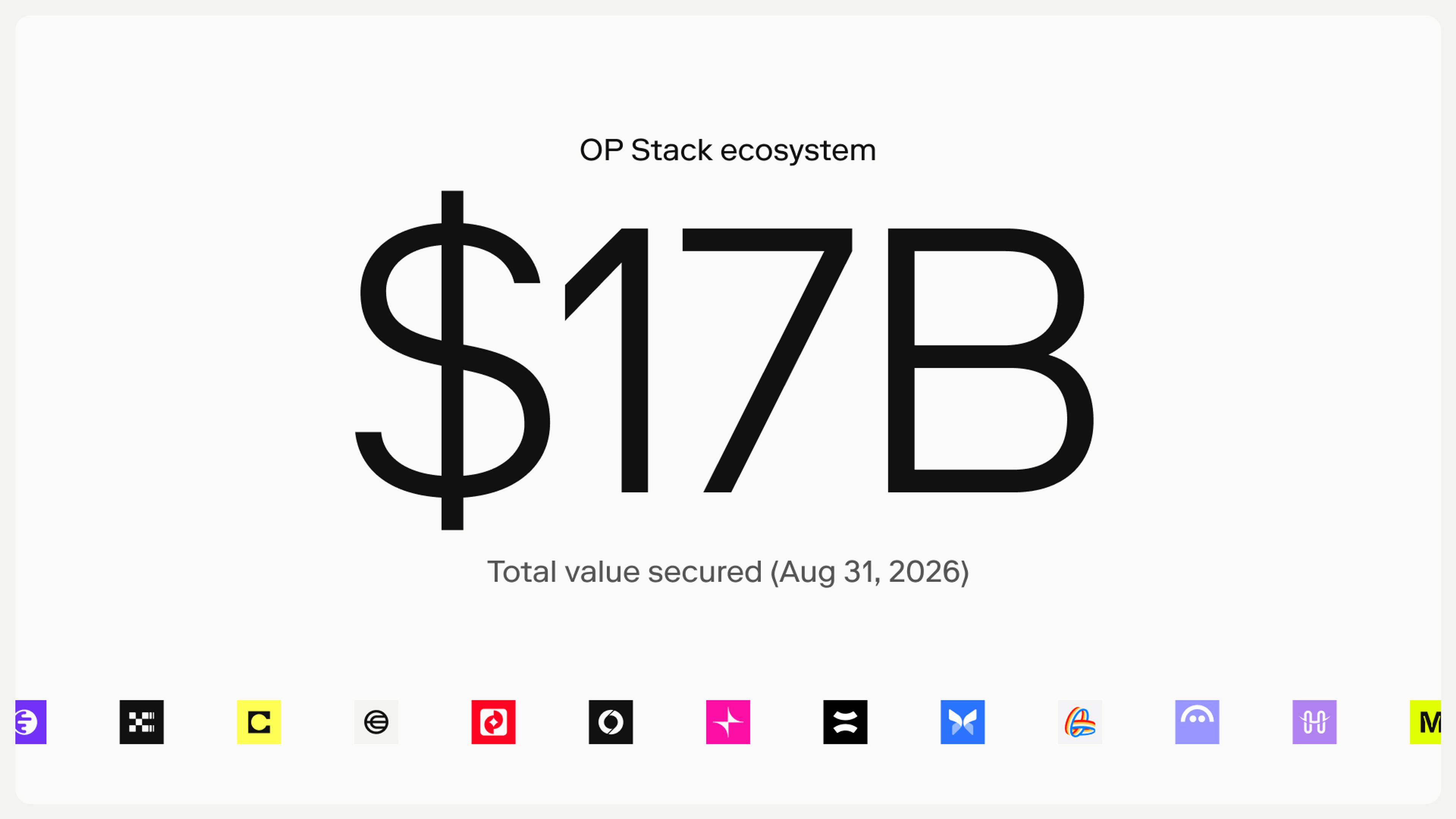
The OP Stack is one of the common bases for these chains. It is the open-source, MIT-licensed technology that a chain is built on, and it has been used to launch more than 50 production chains as of August 2026. The OP Stack ecosystem secured roughly $17 billion in total value as of August 31, 2026 (L2BEAT). Across OP Stack chains, roughly 6.8 billion transactions settled between January and August 2026.
Two facts matter to an exchange's economics and legal review. First, the OP Stack charges no license fee or protocol-level fee to use, so an exchange that runs its own chain controls its transaction economics rather than handing them to a network it does not own. Second, the OP Stack license is MIT, so an exchange can fork and self-host if it chooses. Most teams that could fork decide the operating burden is not worth it and use a managed service instead.
A note on scope. Optimism provides infrastructure. It does not issue, custody, or offer financial products, yield, or deposits. The exchange and its partners build and operate the products; the chain is where those products run.
Should an exchange run the chain itself or use a managed service?
It depends on the exchange's engineering capacity and how much of the infrastructure it wants to own. There are three operating models, and they trade control against operational load.
| Operating model | Who operates the chain | Control the exchange keeps | Support & SLA | Best fit |
|---|---|---|---|---|
| Deploy on OP Mainnet (shared network) | Optimism's public L2, shared block space | Application-level only; shared rules and economics | Shared network SLA | Fastest path to a public production environment; testing a product before committing to a dedicated chain |
| Self Managed (dedicated chain) | The exchange, in its own cloud or VPC, with Optimism support | Full control of infrastructure, config, economics, and chain-level rules | No OP-side uptime SLA; P1 incident response within 1 hour | Exchanges with strong in-house engineering that want to own the stack |
| Fully Managed (dedicated chain) | Optimism deploys, operates, and upgrades the chain; the exchange owns the chain and product | Control of config, economics, and rules without running the infrastructure | 99.9% uptime SLA with service credits; P1/SEV1 response within 30 min | Exchanges that want a dedicated chain without staffing a chain-operations team |
Ink uses the Fully Managed model: Optimism operates the underlying infrastructure as a service while the Ink Foundation owns the chain and its products. That split lets an exchange put its name and its compliance posture on the chain while handing the uptime, upgrades, and incident response to a vendor.
The compliance leaders in the room usually care about a different set of controls. A dedicated OP Stack chain supports sanctions and address screening at the sequencer level and permissioned access to the chain, with integrations from providers such as TRM and Forta, the two providers built and live in production as of September 2026. No base network makes a product compliant on its own. The institution still owns its regulatory analysis, its controls, and its approvals. The infrastructure is compatible with those controls; it does not certify them.
What institutional DeFi products can an exchange actually offer, and where does the yield come from?
An exchange can offer settlement, lending, borrowing, yield, and stablecoin payments, but the exchange is not the source of the yield in most designs. The yield comes from onchain lending markets and strategies that the exchange or its partners operate. The exchange provides the front door and the settlement layer; a protocol provides the credit engine.
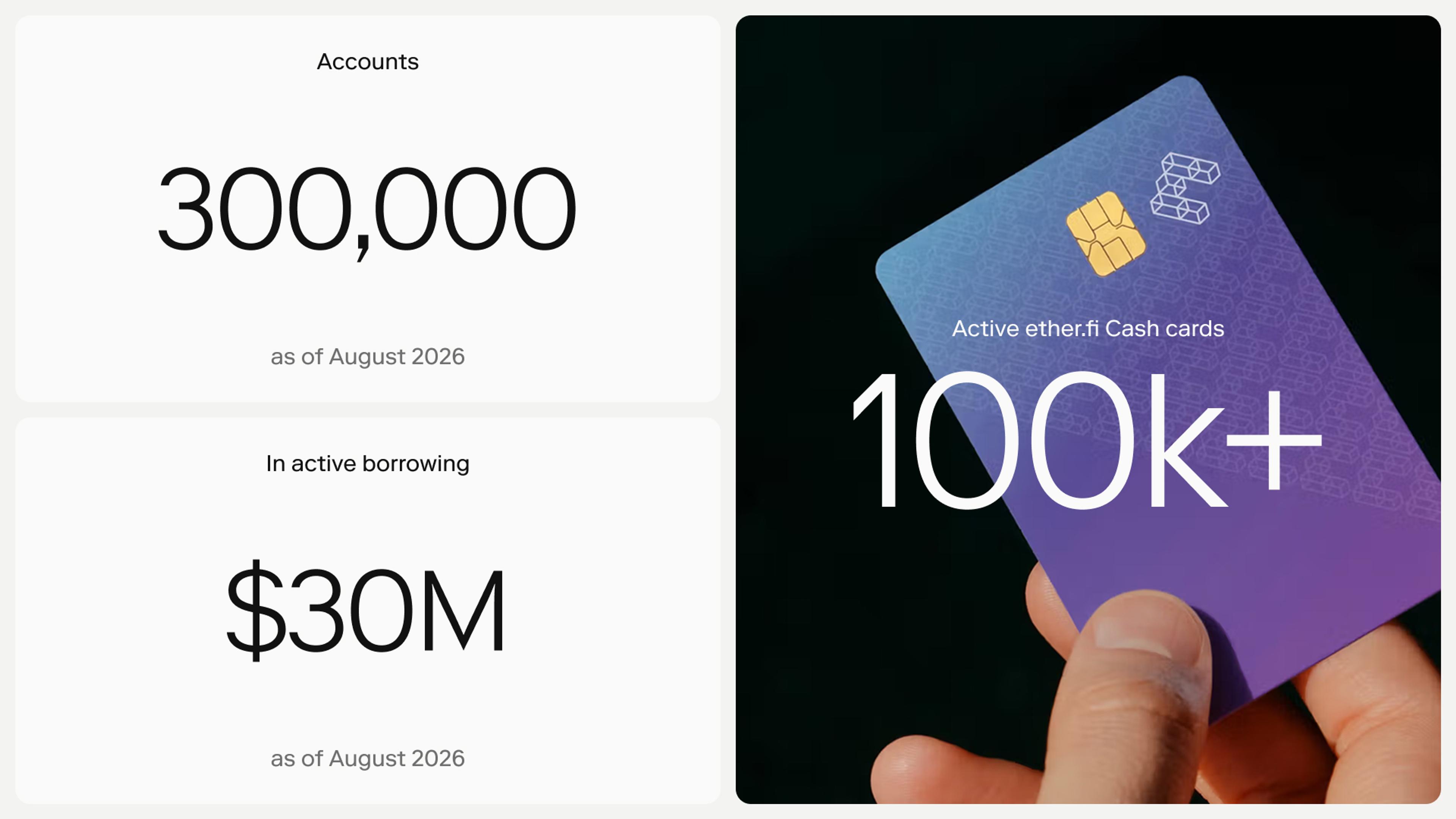
ether.fi Cash is a concrete example of the pattern, running on OP Mainnet rather than a dedicated exchange chain. Its credit backend uses a dedicated, ether.fi-operated Aave V4 instance with roughly $30 million in active borrowing as of August 31, 2026. It reports more than 100,000 active cards and more than 300,000 accounts as of August 2026. ether.fi has stated a target of $500 million in lending capacity by 2027. The point for an exchange is the shape of it: a card and account product on the front, a dedicated lending instance on the back, both onchain, both operated by the product owner rather than the chain provider.
| Step | What happens |
|---|---|
| 1. User-facing product | Card or account product (e.g. ether.fi Cash) |
| 2. Settlement layer | OP Stack chain (e.g. OP Mainnet) |
| 3. Credit engine | Dedicated Aave V4 instance, ~$30M active borrowing (Aug 31, 2026) |
| 4. Yield to user | Onchain lending returns routed back to the product |
Stablecoin rails are the other piece most exchanges want. Card and payment volume is measurable now. Optimism carried about 29% of crypto card settlement volume as of July 2026 (a16z crypto, Paymentscan), which is a signal that dollar-denominated onchain spend is running through this infrastructure at scale.
How does this compare to building institutional DeFi without a dedicated chain?
An exchange can offer some DeFi products without launching a chain, by deploying on a shared public network like OP Mainnet or by integrating existing protocols on chains it does not control. That path is faster and carries less operational weight. It also gives up sequencer economics, chain-level compliance controls, and the ability to shape the environment around the exchange's product.
A dedicated chain is the heavier commitment and the one that returns more control. The right answer depends on how central onchain finance is to the exchange's strategy. An exchange running a pilot or a single product may not need its own chain. An exchange making onchain settlement and credit a core line of business usually does, because the control over compliance and economics compounds as the product grows.
There is no single correct choice here. A shared network wins on speed and simplicity. A dedicated chain wins on control and economics. The decision is a function of scale, engineering capacity, and how much the exchange wants to own.
Frequently Asked Questions
What is institutional DeFi for a crypto exchange?
Institutional DeFi is onchain financial infrastructure offered to an exchange's users with the controls an institution needs: onchain settlement, lending and borrowing, yield products, and stablecoin payment rails, delivered with address screening, permissioned access, and auditability. The exchange or its vetted partners build the products, and the exchange settles them on infrastructure it controls, usually a dedicated Layer 2 chain.
Does an exchange have to launch its own chain to offer DeFi?
No. An exchange can deploy products on a shared public network such as OP Mainnet, or integrate existing protocols on chains it does not control. Launching a dedicated chain is the path exchanges choose when they want to control compliance rules, control their transaction economics, and shape the environment around their product. It trades faster launch for more control.
What is the OP Stack, and how does it relate to OP Enterprise?
The OP Stack is the open-source, MIT-licensed technology that a chain is built on. OP Enterprise is the commercial product for launching and running a dedicated chain, offered in three operating models: OP Mainnet (shared network), Self Managed, where the exchange runs the infrastructure with Optimism support, and Fully Managed, where Optimism operates the infrastructure as a service while the exchange owns the chain and product.
Is Ink run by Optimism?
Optimism operates Ink's underlying chain infrastructure as a Fully Managed service. The Ink Foundation owns the chain and everything users interact with; Optimism runs the infrastructure, not the product.
Who controls the transaction economics when an exchange runs its own chain?
The OP Stack is open-source (MIT) and charges no license fee or protocol-level fee to use. For an exchange that runs its own dedicated OP Stack chain, that means it controls the transaction economics rather than handing them to a network it does not own.
Does running a chain on the OP Stack make an exchange's products compliant?
No base network makes a product compliant on its own. A dedicated OP Stack chain supports sequencer-level sanctions and address screening and permissioned access, with integrations from providers such as TRM and Forta. The exchange still owns its regulatory analysis, controls, and approvals. The infrastructure is compatible with those controls; it does not certify them.
What SLA does an exchange get with each OP Enterprise operating model?
Self Managed carries no OP-side uptime SLA since the exchange runs its own infrastructure, with P1 incident response within 1 hour. Fully Managed carries a 99.9% uptime SLA with service credits and P1/SEV1 response within 30 minutes. A Mission-Critical tier is also available with a 99.95% uptime SLA, P1 response within 15 minutes, and a dedicated technical account manager.
Glossary
Layer 2 (L2) — A blockchain that runs on top of a base chain like Ethereum, batching transactions to cut cost and increase speed while inheriting the base chain's security.
Sequencer — The component that orders and processes transactions on an L2. The chain earns the transaction revenue and can apply screening rules at this level.
Settlement — The onchain finalization of a transaction, moving value between accounts with a public, auditable record.
Stablecoin rails — Payment and transfer infrastructure denominated in dollar-pegged tokens such as USDC and USDT.
Fully Managed — An OP Enterprise operating model where Optimism deploys, operates, and upgrades the chain infrastructure while the customer owns the chain and its products.
Self Managed — An OP Enterprise operating model where the customer runs the chain infrastructure in its own cloud or VPC with Optimism support.
Authored by

Optimism